National Science Centre funded project SONATA 2026–2029
How late antique people obtained books, how they exchanged them through epistolary networks, and how this shaped the intellectual history of Late Antiquity
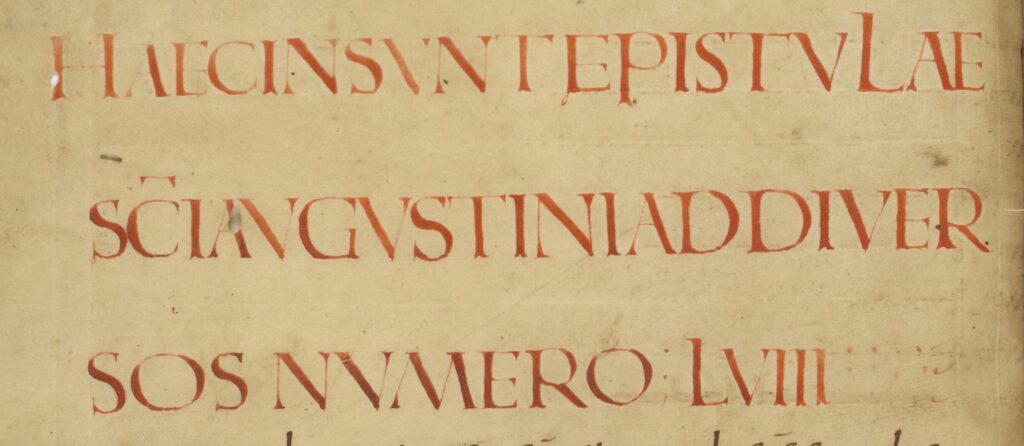
In 393/394, two Roman gentlemen and Christian intellectuals, Paulinus of Nola and Alypius of Thagaste, exchanged letters about books. Paulinus thanks Alypius for a copy of Augustine of Hippo’s work, while Alypius asks his friend to find a rare copy of a famous historical chronicle. Using his contacts in Rome, Paulinus locates a copy. The volumes travel from city to city and across the Mediterranean Sea, sometimes many times. Book collections are searched for rare titles, texts are laboriously copied by scribes, corrected for errors, bound, and sent to subsequent recipients. The creation of new ideas, the exchange of thoughts, the dissemination of new genres of Christian literature, disputes over doctrine, and the promotion of new religious values – all of this depended on the complex material and social mechanisms that shaped late antique reading culture. This project aims to examine the social networks of book exchange and the cultural conditions of reading and writing in the fourth and fifth centuries, an era when intellectual life was increasingly subordinated to spiritual goals, the search for truth, and its establishment in authoritative formulas such as creeds. At the same time, the dissemination of books increasingly relied on personal ties between ascetics, monks, and clerics, maintained through letters and travel, and on monastic and church book collections, while the book market, philosophical circles, schools, and public libraries receded into the background.
The study of the network of authors and readers and the mechanisms of book circulation will also reveal the role played in this system by people on the bottom of social hierarchy, still often overlooked in historical narratives: scribes, notaries, book craftsmen, and couriers who sometimes travelled long distances with letters and codices to deliver. Many of these people were slaves or former slaves, and their contribution to intellectual production has traditionally been underestimated or even completely overlooked. Highlighting their important place in the network of publication and exchange provides an opportunity to better assess their role.
The content of books was directly accessible only to a minority who could read, but the ideas and concepts developed in the texts influenced the lives, beliefs, and religious practices of broad social strata in the fourth and fifth centuries. Therefore, by examining the transmission of texts, the project will also analyse the ways in which their content and meaning could reach uneducated people, especially in the context of catechesis, worship, festivals, and pastoral interactions.